Egypt’s Role in Marine Logistics
Egypt’s maritime legacy stretches back over five millennia, from the days when Pharaonic fleets navigated the Nile and the Red Sea to the present era of smart ports and automated logistics. Positioned at the crossroads of three continents and commanding one of the world’s most vital waterways the Suez Canal Egypt has long held a central role in global trade. Today, that legacy is being redefined as the nation transforms into a modern maritime logistics powerhouse, linking Asia, Africa, and Europe through innovation, infrastructure, and global partnerships.
A Strategic Gateway Between East and West
Few nations in the world possess a maritime location as strategically critical as Egypt’s. With over 2,000 kilometres of coastline along the Mediterranean and the Red Sea, Egypt connects global trade routes that carry more than 12% of world commerce through the Suez Canal each year. This waterway remains the shortest and most reliable link between East and West, saving ships an average of 10 to 14 days compared to traditional routes around the Cape of Good Hope.
Egypt’s advantage, however, is no longer defined by geography alone. The country has embarked on an ambitious strategy to modernise its maritime infrastructure and logistics capabilities to ensure its ports are not just gateways for vessels but fully integrated hubs for industry, storage, and distribution.
Ports as Engines of Growth
The transformation of Egypt’s ports has accelerated dramatically in the past decade. Major facilities such as Alexandria, Ain Sokhna, Damietta, and East Port Said are undergoing major expansion and digitalisation programmes designed to increase capacity, reduce turnaround times, and integrate seamlessly with inland transport networks.
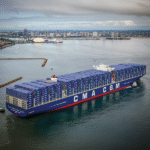
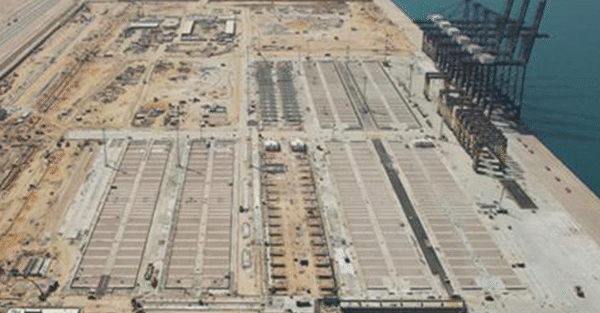
- Ain Sokhna Port, situated at the southern entrance of the Suez Canal Economic Zone (SCZone), is emerging as one of the Red Sea’s most advanced terminals. Operated in partnership with Hutchison Ports, COSCO, and CMA CGM, Ain Sokhna is being equipped with AI-driven monitoring systems, electric-powered cranes, and automated cargo handling. Once complete, the port will be capable of handling over 3.5 million TEUs annually and will serve as the core of Egypt’s Red-to-Med logistics corridor.
- Alexandria Port, the nation’s oldest and busiest, still handles around 60% of Egypt’s foreign trade. Recent upgrades have included new deep-water quays, expanded container yards, and fully digitised management systems, transforming it into a smart port aligned with international standards.
- Damietta Port has become Egypt’s first fully digital port, pioneering automation, real-time cargo tracking, and electronic clearance systems. This initiative is reducing bottlenecks and serving as a model for future port modernisation across the country.
Meanwhile, smaller ports such as Safaga, Nuweiba, and Dekheila are being restructured to handle both commercial and tourism traffic, diversifying the national logistics portfolio and improving resilience against global market fluctuations.
The Red-to-Med Logistics Corridor
One of the most ambitious projects shaping Egypt’s maritime future is the Red-to-Med Corridor a high-speed, multimodal transport system connecting Ain Sokhna on the Red Sea with Alexandria and Dekheila on the Mediterranean. The corridor combines sea, rail, and road logistics to move cargo across Egypt in under 24 hours, dramatically reducing transit times between Asia and Europe.
This initiative is not merely a transport link; it is a comprehensive logistics ecosystem connecting industrial zones, dry ports, and inland terminals. The corridor is expected to enhance Egypt’s appeal as a global trans-shipment centre while creating thousands of jobs in logistics, manufacturing, and value-added services. According to Egypt’s Ministry of Transport, the corridor will turn Egypt into “the shortest, fastest, and most secure maritime bridge between East and West.”
Technology and Sustainability: The Future of Egyptian Logistics
Egypt’s vision for its maritime sector extends beyond capacity expansion. The focus is equally on digitalisation, automation, and sustainability the three pillars of modern logistics competitiveness.
Across major ports, digital transformation projects are integrating AI-powered monitoring systems, GPS and RFID tracking, and real-time cargo visibility. These technologies reduce congestion, improve efficiency, and cut administrative costs. Egypt’s adoption of smart port models follows global best practices pioneered in Singapore, Rotterdam, and Shanghai—where automation has proven essential for maintaining reliability and speed.
Sustainability has also become central to Egypt’s logistics vision. Following commitments made during the COP27 Climate Summit in Sharm El-Sheikh, port authorities are adopting green technologies such as electric cranes, automated yard vehicles, and energy-efficient lighting systems. At Ain Sokhna, stormwater recycling and waste management systems are being installed to ensure compliance with international environmental standards. This green transition aligns Egypt with the UN Sustainable Development Goals (SDGs) and enhances its competitiveness in a market increasingly driven by eco-conscious trade practices.
Global Partnerships Driving Growth
Egypt’s maritime development is being powered by partnerships with some of the world’s leading port operators and logistics firms. Companies like DP World, Hutchison Ports, COSCO Shipping, and CMA CGM are actively investing in Egyptian terminals, bringing not only capital but also expertise and technology transfer.
A key driver of these partnerships has been Egypt’s collaboration with China under the Belt and Road Initiative (BRI). Chinese investment has played a pivotal role in expanding Ain Sokhna and East Port Said, establishing industrial zones, and introducing advanced port equipment. For instance, the Chinese manufacturer ZPMC has supplied Egypt with next-generation ship-to-shore and gantry cranes, ensuring the country’s ports can handle ultra-large container vessels with greater efficiency.
Trade between Egypt and China surpassed $15 billion in 2024, making China Egypt’s largest trading partner. Much of this commerce moves through the Red Sea and Suez Canal, reinforcing the importance of Egypt’s maritime logistics infrastructure as the connective tissue of intercontinental trade.
Economic Impact and National Vision
Under President Abdel-Fattah El-Sisi’s administration, Egypt has placed maritime development at the core of its economic strategy. Between 2014 and 2023, Egyptian ports handled over 1.5 billion tons of cargo and 60 million containers, while berth lengths expanded from 37 km to 67 km and port areas nearly doubled. By 2030, Egypt aims to handle 400 million tons of goods annually and increase its container throughput to 40 million TEUs.
These improvements are expected to generate massive economic benefits—stimulating foreign investment, creating jobs, and reinforcing Egypt’s role as the maritime gateway to Africa and the Middle East. The integration of ports with industrial and logistics zones ensures that trade generates domestic value through manufacturing, assembly, and warehousing operations, rather than serving merely as transit activity.
Challenges and Opportunities Ahead
Despite these achievements, Egypt’s maritime logistics sector still faces challenges. Global shipping volatility, energy price fluctuations, and competition from nearby regional ports such as Jebel Ali and Djibouti all require Egypt to maintain momentum through consistent policy and investment. Continued focus on training, digital skills, and sustainable infrastructure will be essential for Egypt to fully realise its potential as a logistics hub of the future.
At the same time, opportunities abound. The growth of e-commerce, the expansion of African intra-trade under the African Continental Free Trade Area (AfCFTA), and the rising demand for resilient supply chains post-COVID all play directly to Egypt’s strengths. With its upgraded ports, advanced logistics network, and strategic location, Egypt is uniquely positioned to capture this global shift.
Conclusion: The Future Anchored in Logistics
Egypt’s maritime story is both ancient and new a tale that began with the Pharaohs and is now being rewritten with steel, data, and digital connectivity. From the smart terminals of Ain Sokhna to the historic docks of Alexandria, the country is positioning itself not just as a transit point, but as a fully integrated logistics hub driving regional and global trade.
As Egypt continues to invest in green technologies, digital systems, and international partnerships, it stands ready to anchor a new era of maritime excellence. For logistics firms and investors, this transformation represents a wealth of opportunities across transport, warehousing, and value-added services.
According to Pilot for Supply, a leading name in Egypt’s marine logistics sector, “The evolution of Egypt’s ports reflects not only infrastructure expansion but also a strategic vision one that connects efficiency, sustainability, and innovation at the heart of maritime trade.” With this momentum, Egypt’s journey toward becoming a global maritime logistics hub is well underway, bridging ancient legacy with the promise of a connected future.